


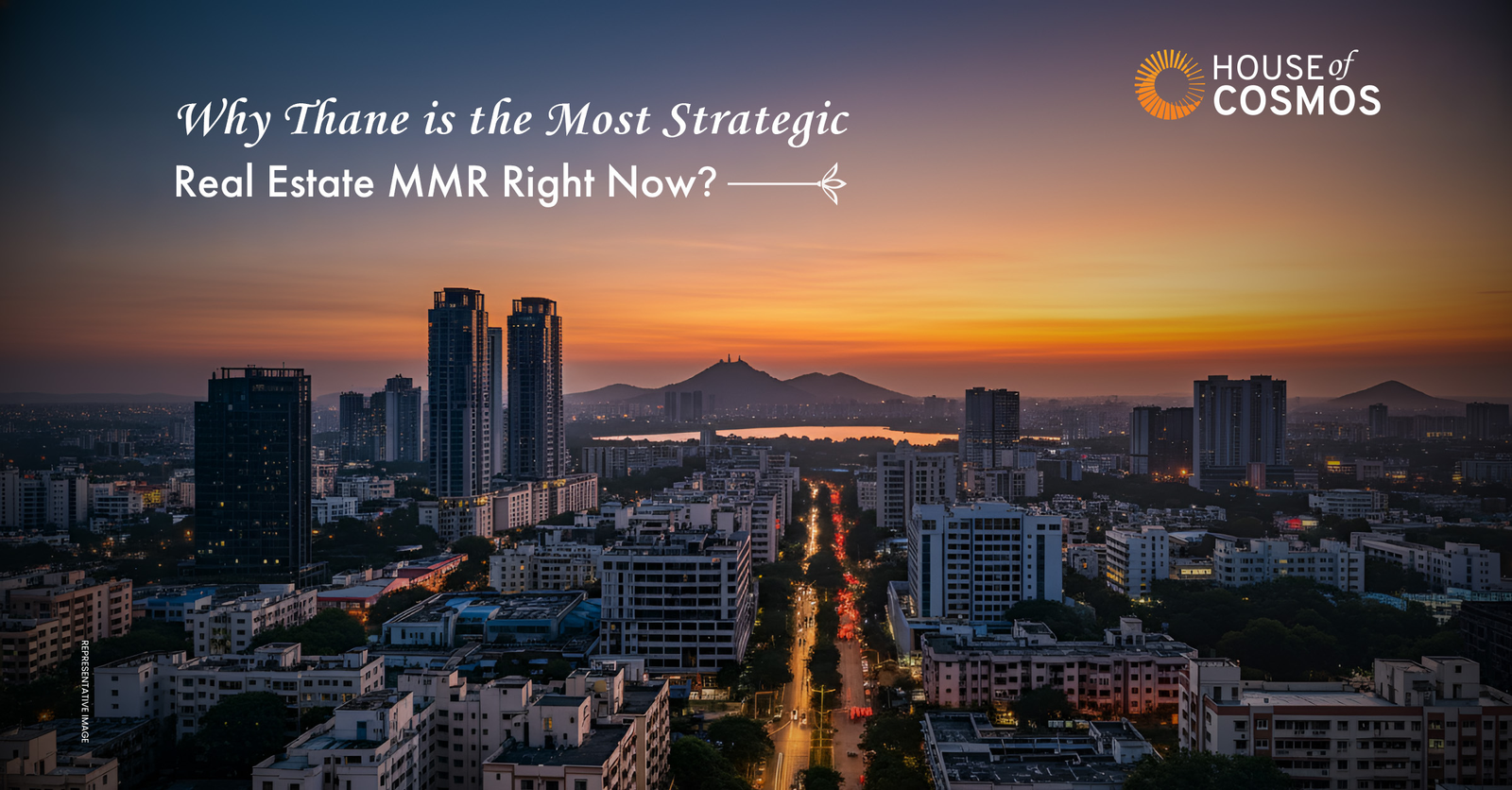

Why Thane is the Most Strategic Real Estate Move in MMR Right Now
Thane’s transformation over the last decade has been both structural and organic. What was once seen largely as a residential suburb has evolved into a multi-dimensional urban centre that combines employment, infrastructure, housing, and natural surroundings. As the Mumbai Metropolitan Region continues to expand outward, Thane has emerged as a balanced city where growth is not concentrated in one direction but distributed across residential, commercial, and lifestyle ecosystems.
In 2026, Thane’s real estate momentum is rooted in execution rather than anticipation. Infrastructure is visible, commercial activity is active, and residential demand is driven by long-term living requirements.
A Growing Commercial and Employment Hub
One of Thane’s strongest yet often understated advantages is its expanding commercial footprint. The city has developed into a key employment node within MMR, reducing dependence on South Mumbai, BKC, and Andheri for daily work travel.
Key commercial and business zones include:
- Wagle Estate Industrial and Commercial Belt, home to IT parks, corporate offices, and manufacturing units
- Ghodbunder Road corridor, which has seen the rise of modern business parks and mixed-use developments
- Thane West and Central Thane, supporting retail, co-working spaces, healthcare, and education hubs
This growing commercial base has created a strong local workforce, directly supporting residential demand. Homes in Thane are increasingly being purchased by people who work within the city itself, leading to stable occupancy, shorter commutes, and healthier work-life balance.
Infrastructure That Supports Daily Movement and Growth
Infrastructure development in Thane is not limited to transport alone. It spans mobility, road networks, public amenities, and long-term urban planning.
Major infrastructure projects shaping the city include:
- Metro Line 4 (Wadala to Kasarvadavali), enhancing north-south connectivity across key residential zones
- Metro Line 5 (Thane–Bhiwandi–Kalyan), improving east-west movement and supporting industrial and logistics hubs
- Ghodbunder Road upgrades, easing traffic flow between Thane and the western suburbs
- Improved arterial roads, flyovers, and junctions, reducing congestion within city limits
These projects are already influencing buyer preferences, particularly for residential developments located close to future metro stations and major transit routes.
Residential Growth Driven by End-User Demand
Residential values in Thane have shown consistent upward movement over recent years, supported by real housing demand rather than speculative interest. Buyers are attracted by the availability of larger, better-planned homes and the ability to live within a self-sufficient city.
Demand continues to centre around practical configurations, especially 1 BHK and 2 BHK homes, which cater to first-time buyers, upgrading families, and professionals working in nearby commercial zones. The presence of ongoing construction activity across multiple micro markets reflects confidence in sustained demand.
Green Cover and Natural Surroundings as a Core Advantage
Unlike many dense urban centres, Thane offers a rare combination of city infrastructure and natural surroundings. The city is known for its proximity to lakes, hills, and green pockets, creating a healthier living environment.
Notable natural assets include:
- Yeoor Hills and Sanjay Gandhi National Park access, offering green buffers and cleaner air
- Upvan Lake, Talao Pali, and other water bodies, enhancing the city’s ecological balance
- Tree-lined residential pockets and low-density zones, particularly along Ghodbunder Road
This connection to nature has become increasingly important for homebuyers prioritising wellness, open spaces, and long-term liveability.
Lifestyle Infrastructure Supporting Everyday Living
Thane’s appeal also lies in its mature social infrastructure. The city is home to established schools, hospitals, malls, entertainment zones, and cultural spaces. New residential developments are increasingly integrating lifestyle amenities such as wellness zones, open greens, fitness spaces, and community areas, aligning with evolving buyer expectations.
Homes are no longer evaluated solely on location or price but on how they support daily routines, family time, and personal well-being.
A Balanced Market with Long-Term Stability
What makes Thane strategically important within MMR is its balance. Residential growth is supported by employment opportunities, infrastructure execution, and environmental advantages. Commercial development strengthens housing demand, while green spaces enhance quality of life.
This equilibrium has helped Thane avoid extreme market swings and positioned it as a dependable destination for both homebuyers and long-term investors.
Looking Ahead
As infrastructure projects near completion and commercial activity continues to expand, Thane’s role within the Mumbai Metropolitan Region is expected to strengthen further. The city is no longer an alternative to Mumbai but a destination in its own right.
For those seeking a combination of connectivity, employment access, green surroundings, and sustainable urban living, Thane stands out as one of the most thoughtfully evolved real estate markets in MMR today.